Front Desk : +91 9798215886   |   Address : MIG-207, Lohiya Nagar, Kankarbagh, Malahi Pakri , PATNA 800020 (Bihar).

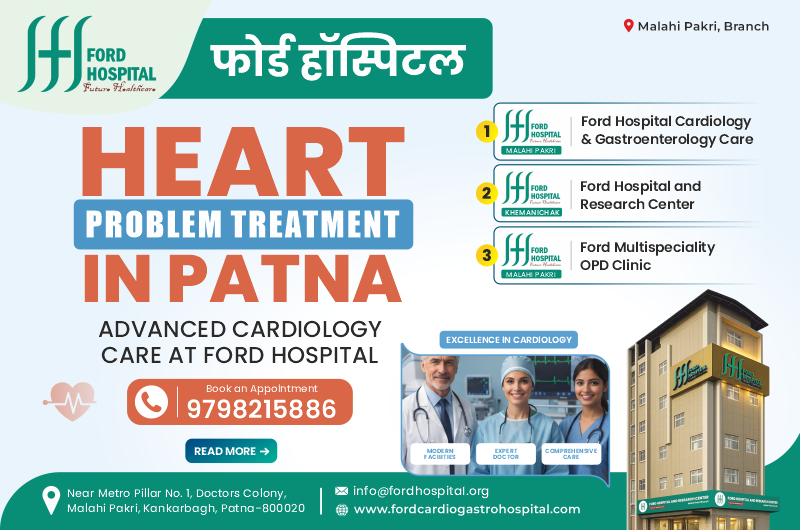
Heart Problem Treatment in Patna

Heart Problem Treatment in Patna

Heart Problem Treatment in Patna: A Clinical Guide to Comprehensive Cardiovascular Care

In clinical practice, the term “heart problem” encompasses a diverse spectrum of cardiovascular disorders affecting the structure, electrical conduction system, or blood supply of the heart. These conditions include Coronary Artery Disease (CAD)—characterized by plaque buildup narrowing the arteries—alongside cardiac arrhythmias (irregular heartbeats), structural valvular defects, cardiomyopathies (weakened heart muscle), and chronic heart failure. While some cardiac conditions manifest acutely as medical emergencies, many develop progressively over years due to underlying metabolic risk factors.

In Patna and across Bihar, the prevalence of cardiovascular disorders is closely linked to rising rates of hypertension, Type 2 diabetes, dyslipidemia, and sedentary lifestyles. Effectively treating a heart problem requires accurate diagnostic categorization to determine whether a patient requires targeted catheter-based interventions, tertiary surgical backup, or ongoing outpatient medical management.

For patients and families seeking structured medical care for cardiovascular conditions, the Ford Hospital network provides an integrated clinical ecosystem. In strict adherence to the National Medical Commission (NMC) 2026 guidelines regarding factual, transparent, and evidence-based medical communication, the following is an objective overview of our network’s healthcare facilities designed to diagnose and treat heart problems. The facilities are structured sequentially by their role in targeted interventional cardiology, tertiary surgical and emergency care, and long-term outpatient management.

Integrated Cardiovascular Facilities Across the Network

Effectively managing the wide spectrum of heart problems requires a coordinated clinical continuum. Care is delivered across our network’s dedicated facilities, prioritizing specialized catheter-based procedures, tertiary inpatient and surgical infrastructure, and foundational outpatient follow-up.

1. Ford Hospital Cardiology & Gastroenterology Care

Operating as a focused dual-specialty facility, Ford Hospital Cardiology & Gastroenterology Care (located at Malahi Pakri, Kankarbagh, Patna) serves as the primary center for targeted interventional cardiology procedures, precision imaging, arrhythmia management, and specialized differential diagnostics.

  • Interventional Cardiology & Precision Imaging: The facility is equipped with modern Catheterization Laboratory (Cath Lab) infrastructure supporting diagnostic transradial coronary angiographies and Percutaneous Coronary Interventions (PCI / stenting). Specialists utilize advanced intravascular imaging modalities—such as Intravascular Ultrasound (IVUS) and Optical Coherence Tomography (OCT)—alongside Fractional Flow Reserve (FFR) to structurally assess arterial blockages and guide precise stent placement.
  • Cardiac Device Implantation: For heart problems involving electrical conduction abnormalities or severely weakened heart muscle, the center performs implantations of permanent pacemakers, Implantable Cardioverter-Defibrillators (ICDs), and Cardiac Resynchronization Therapy (CRT) devices.
  • Cardio-Gastric Clinical Coordination: Many cardiac patients require lifelong antiplatelet or anticoagulant therapy, increasing the risk of gastrointestinal bleeding. Furthermore, upper gastrointestinal disorders frequently mimic cardiac chest symptoms. Direct collaboration between clinical cardiologists and gastroenterologists under one roof enables coordinated diagnosis and safe, protective medication management.

Explore Our Dedicated Core Services:

2. Ford Hospital And Research Center — Comprehensive Tertiary Healthcare Hub

Functioning as the primary multispeciality inpatient, surgical, and emergency center of the network, Ford Hospital & Research Center (located near New Bypass, Khemnichak, Patna) provides the tertiary infrastructure required for managing complex structural heart diseases, open-heart surgeries, and acute cardiogenic emergencies.

When a heart problem presents as an acute myocardial infarction, severe decompensated heart failure, or a structural defect requiring open-heart surgery, comprehensive inpatient backup is essential.

  • 24/7 Emergency & Intensive Coronary Care (ICCU): The facility maintains a round-the-clock emergency response team and specialized ICCUs equipped for continuous hemodynamic monitoring, mechanical ventilation, and Intra-Aortic Balloon Pump (IABP) support to stabilize critically ill cardiac patients.
  • Cardiothoracic & Vascular Surgery (CTVS): For patients with complex multi-vessel coronary artery disease or severe valvular heart disease unsuitable for catheter-based repairs, the hospital houses modular operation theaters for Coronary Artery Bypass Grafting (CABG), including beating-heart bypass procedures, and surgical valve repair or replacement.
  • Acute Interventional & Multisystem Support: Equipped with an on-site Cath Lab for emergency primary angioplasty, the hospital also integrates nephrology (to manage cardiorenal syndrome and provide dialysis support), pulmonology, and internal medicine to manage overlapping organ dysfunction.

Multidisciplinary Clinical Directory at Ford Hospital:

  • 24×7 Emergency & Trauma Care — The absolute frontline for acute myocardial infarctions (heart attacks), sudden cardiac arrest, and complex cardiogenic shock requiring immediate hemodynamic stabilization.
  • Cardiology & Angioplasty Centre — The core surgical hub for clearing blocked arteries via primary emergency stenting and managing severe, life-threatening heart rhythm disorders.
  • Cardiac Surgery (CABG, Valve) — Providing highly advanced “beating heart” bypass surgeries, complex heart valve replacements, and surgical repairs for structural heart defects.
  • Neurology & Neurosurgery – including Brain-Stroke Unit — Crucial for managing the severe stroke risks associated with Atrial Fibrillation (irregular heartbeat) and sudden drops in blood pressure to the brain during cardiac events.
  • Gastroenterology & Hepatology — Treating severe gastric overlaps (like extreme acid reflux) that often mimic the chest pain of heart attacks, preventing fatal misdiagnoses, and managing liver congestion caused by right-sided heart failure.
  • Urology & Kidney-Stone Clinic — Managing structural urinary issues, particularly for elderly male cardiac patients who cannot safely stop their life-saving blood-thinning medications for standard surgeries.
  • Nephrology & Dialysis Centre — Protecting the kidneys from “Cardio-Renal Syndrome,” a deadly condition where severe heart failure directly causes the kidneys to shut down, requiring immediate dialysis.
  • Critical Care & ICU — Fully equipped with advanced ventilators, continuous hemodynamic monitoring, and Intra-Aortic Balloon Pumps (IABP) to mechanically keep the heart pumping in highly unstable patients.
  • Internal Medicine — Managing complex, multi-system infections that can directly attack and destroy the heart valves, a dangerous condition known as infective endocarditis.
  • Endocrinology & Diabetes — Diabetes is the ultimate catalyst for cardiovascular destruction. Our endocrinologists strictly manage HbA1c levels to protect the coronary arteries from further plaque buildup.
  • General & Laparoscopic Surgery — Providing comprehensive surgical backup if cardiac patients suffer from overlapping physical traumas or acute abdominal emergencies.
  • Orthopedics & Trauma – Knee Replacement — Restoring pain-free joint mobility so recovering cardiac patients can safely engage in the cardiovascular treadmill exercise absolutely required for heart rehabilitation.
  • Physiotherapy & Rehabilitation — Delivering specialized, heavily monitored Cardiac Rehab programs to help heart attack survivors safely rebuild their cardiovascular endurance and heart muscle strength.
  • Pulmonology & Respiratory Care — Treating severe pulmonary edema (fluid violently backing up into the lungs) caused by left-sided congestive heart failure.
  • ENT (Ear-Nose-Throat) — Managing severe Obstructive Sleep Apnea, which is a major, hidden trigger for highly dangerous nighttime cardiac arrhythmias and sudden high blood pressure spikes.
  • Dietetics & Nutrition — Providing highly customized, strict meal plans designed specifically to manage sodium intake, drastically lower LDL cholesterol, and reduce overall body weight for optimal cardiac recovery.
  • Plastic & Reconstructive Surgery — Assisting in complex wound management and sternal closure reconstruction following major open-heart bypass surgeries to prevent deep chest infections.
  • Obstetrics & Gynaecology – Maternity / Pregnancy Care, Women’s Health — Managing high-risk pregnancies that are complicated by maternal congenital heart defects, arrhythmias, or severe, heart-straining preeclampsia.
  • Pediatrics & Child Hospital — Treating congenital heart disease, murmurs, and structural cardiac defects in infants, toddlers, and young children.
  • Piles & Proctology Clinic — Providing minimally invasive laser treatments for severe hemorrhoids in cardiac patients who are on strict, lifelong blood-thinner protocols and cannot risk traditional surgery.

3. Ford Multispeciality OPD Clinic (The Frontline of Heart Health)

Most chronic heart problems—such as essential hypertension, stable angina, mild valvular regurgitation, and compensated heart failure—are managed primarily on an outpatient basis. The Ford Multispeciality OPD Clinic serves as the primary access point for early diagnosis, medical therapy optimization, and post-procedural follow-up.

  • Non-Invasive Cardiac Diagnostics: The clinic conducts foundational cardiovascular evaluations, including resting 12-lead ECGs, 2D Echocardiography to assess chamber dimensions and ejection fraction, Treadmill Stress Testing (TMT) to detect exercise-induced ischemia, and ambulatory Holter monitoring for intermittent arrhythmias.
  • Guideline-Directed Medical Therapy (GDMT): Clinical cardiologists provide consultations to initiate and titrate evidence-based medications—such as beta-blockers, ACE inhibitors/ARNIs, SGLT2 inhibitors, antiplatelets, and statins—to stabilize chronic heart conditions and prevent disease progression.
  • Post-Operative Care & Rehabilitation: Following an angioplasty, device implantation, or bypass surgery, the clinic provides structured outpatient follow-ups, pacemaker interrogations, dietary counseling, and supervised physical rehabilitation protocols.

Outpatient Specialty Directory:

The Cardiovascular Medical Team

Managing the diverse spectrum of heart problems requires diagnostic accuracy and coordination between clinical cardiologists, interventional specialists, and cardiothoracic surgeons. In compliance with NMC guidelines prohibiting superlative rankings of medical practitioners, Ford Hospital provides a team of experienced clinicians focused on standardized, evidence-based care:

Recognizing the Symptoms of Underlying Heart Problems

Because different cardiovascular conditions affect the heart in distinct ways, symptoms can vary significantly. Individuals experiencing any of the following warning signs should seek prompt medical evaluation:

  • Chest Discomfort (Angina): Pressure, tightness, heaviness, or squeezing in the center or left side of the chest—especially if triggered by physical exertion or stress, or radiating to the left arm, shoulder, neck, jaw, or back.
  • Shortness of Breath (Dyspnea): Unexplained breathlessness during routine activities, at rest, or while lying flat in bed (orthopnea), which may indicate heart failure or valvular disease.
  • Palpitations & Irregular Heartbeats: A sensation of the heart racing, pounding, fluttering, or skipping beats, which points toward an underlying electrical arrhythmia.
  • Dizziness, Lightheadedness, or Syncope: Sudden fainting spells or near-fainting episodes, often linked to critical arrhythmias, severe conduction blocks, or narrowed heart valves.
  • Peripheral Edema & Profound Fatigue: Noticeable swelling in the feet, ankles, legs, or abdomen accompanied by persistent exhaustion, reflecting fluid retention caused by reduced cardiac pumping efficiency.

Evidence-Based Clinical Management of Heart Problems

Cardiovascular specialists utilize a structured, step-wise clinical approach to treat heart problems based on severity and etiology:

  1. Diagnostic Risk Stratification: Every treatment plan begins with accurate anatomical and functional assessment using blood biomarkers (lipid profile, HbA1c, Troponin, NT-proBNP), ECG, 2D Echo, and, when indicated, CT or invasive coronary angiography.
  2. Pharmacological Optimization: Many heart conditions are effectively stabilized with targeted medications that lower blood pressure, reduce myocardial oxygen demand, prevent blood clots, control heart rhythm, and remove excess fluid.
  3. Catheter-Based Revascularization & Rhythm Control: When significant arterial blockages restrict blood flow, coronary angioplasty and stenting (PCI) restore circulation without open surgery. Similarly, pacemakers and ICDs are implanted minimally invasively to correct dangerous rhythm abnormalities.
  4. Surgical Correction: For advanced multivessel coronary disease or severe structural valve degeneration, open cardiothoracic procedures (CABG or valve replacement) provide definitive mechanical correction.
  5. Lifestyle & Secondary Prevention: Long-term success relies on strict tobacco cessation, dietary sodium and fat restriction, regular physician-approved exercise, and scheduled outpatient monitoring.

Frequently Asked Questions

1. Do all heart problems require surgery or stenting?

No. Many cardiovascular conditions—including early-stage coronary artery disease, hypertension, mild valvular issues, and certain arrhythmias—can be managed effectively with targeted medications, dietary changes, and regular outpatient monitoring without invasive procedures.

2. How does a cardiologist decide between medication, angioplasty, and bypass surgery?

The clinical decision is based on diagnostic findings, such as the number and location of blocked arteries on an angiogram, the heart’s pumping efficiency (ejection fraction) on an echocardiogram, and the presence of comorbidities like diabetes. Single- or double-vessel blockages are often treated with stenting, whereas complex triple-vessel blockages may require bypass surgery (CABG).

3. What is the difference between a heart attack and heart failure?

A heart attack (myocardial infarction) is a sudden medical emergency where blood flow to a part of the heart muscle is acutely blocked by a clot. Heart failure is typically a chronic condition where the heart muscle gradually becomes too weak or stiff to pump blood efficiently throughout the body.

4. Does the hospital provide 24/7 care for sudden cardiac emergencies?

Yes. Ford Hospital maintains a 24/7 emergency department supported by Intensive Coronary Care Units (ICCU), an active Cath Lab, and on-call cardiologists to manage acute heart attacks, severe arrhythmias, and sudden heart failure exacerbations at any hour.

5. Is cashless hospitalization available for cardiac treatments and surgeries?

Ford Hospital operates a dedicated Third-Party Administrator (TPA) and Insurance coordination desk that facilitates cashless admissions for diagnostic angiographies, angioplasties, device implantations, and bypass surgeries under recognized private insurers and eligible government healthcare schemes, subject to standard policy terms.
SHARE THIS ARTICLE

Leave a Reply

Your email address will not be published. Required fields are marked *