A myocardial infarction, commonly known as a heart attack, occurs when the blood flow that brings oxygen to the heart muscle is severely reduced or cut off completely. This typically happens because coronary arteries that supply the heart muscle become narrowed from a buildup of plaque. When a plaque ruptures, a blood clot forms, blocking blood flow and leading to progressive damage to the heart muscle.
In Patna and across Bihar, changing lifestyle patterns, increased psychosocial stress, and a high prevalence of conditions like diabetes and hypertension have contributed to a rising incidence of acute cardiac events. During a heart attack, timely clinical intervention within the “Golden Hour”—the first sixty minutes following symptom onset—is critical for restoring blood flow, stabilizing the patient, and limiting irreversible myocardial damage. Managing such emergencies effectively requires immediate access to specialized facilities equipped with continuous catheterization laboratories (Cath Labs), intensive coronary care units (ICCU), and cardiothoracic surgical support.
For patients and families seeking structured emergency cardiovascular care, the Ford Hospital network provides a comprehensive clinical ecosystem. In strict adherence to the National Medical Commission (NMC) guidelines regarding factual, transparent, and evidence-based medical communication, the following is an objective overview of our network’s key healthcare facilities, designed to support acute heart attack treatment and long-term cardiac rehabilitation.
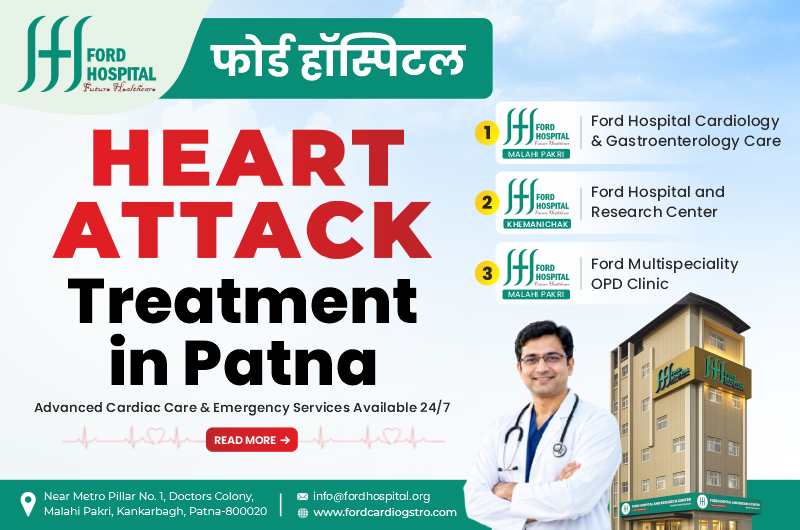
Effective heart attack management frequently requires rapid multidisciplinary coordination. Care is delivered across three dedicated facilities within the network, structured sequentially to address immediate emergency intervention, complex surgical backup, and post-attack rehabilitation.
Operating as the focused interventional specialty facility, Ford Hospital Cardiology & Gastroenterology Care (located at Malahi Pakri, Kankarbagh, Patna) is structured to serve as the primary hub for managing acute cardiovascular emergencies.
During a heart attack, rapid assessment and immediate restoration of blood flow are the most critical priorities. This center coordinates targeted cardiac care pathways under a single clinical framework to minimize treatment delays.
Explore Our Dedicated Core Services:
Functioning as the main multispeciality inpatient center of the network, Ford Hospital & Research Center (located near New Bypass, Khemnichak, Patna) provides the advanced diagnostic, intensive care, and surgical infrastructure necessary to back up acute heart attack management.
While primary angioplasty resolves many heart attacks, some patients present with complex multivessel blockages or mechanical complications that require a broader multidisciplinary approach.
Multidisciplinary Clinical Directory at Ford Hospital:
Effective heart attack treatment does not end at hospital discharge; it requires rigorous post-intervention follow-up and proactive secondary prevention. The Ford Multispeciality OPD Clinic serves as the primary access point for cardiac rehabilitation, routine monitoring, and preventive care.
Outpatient Specialty Directory:
The clinical management of a heart attack depends on rapid diagnostic precision and procedural competence. Ford Hospital’s cardiovascular team includes experienced clinicians across interventional cardiology and cardiothoracic surgery:
Seeking immediate medical evaluation is critical when experiencing potential heart attack symptoms. Individuals experiencing the following should proceed immediately to a designated emergency medical center:
Following a heart attack, cardiovascular specialists recommend adopting specific lifestyle modifications to mitigate the risk of a secondary event:
1. What is the standard protocol for heart attack treatment at Ford Hospital?
Upon arrival at the emergency department, patients undergo an immediate ECG and clinical assessment. If an acute myocardial infarction is confirmed, the protocol typically involves stabilizing medications and rapid transfer to the Cath Lab for a primary angioplasty to open the blocked artery.
2. What is primary angioplasty?
Primary angioplasty is an emergency procedure where a catheter with a small balloon is guided to the blocked coronary artery. The balloon is inflated to open the vessel, and a stent (a tiny wire mesh tube) is usually placed to keep the artery open and restore blood flow to the heart muscle.
3. Does the hospital facilitate cashless hospitalization for emergency cardiac procedures?
Ford Hospital operates a dedicated Third-Party Administrator (TPA) and Insurance coordination desk that works with recognized private insurers, public TPAs, and eligible government healthcare schemes in accordance with standard policy terms for emergency admissions.
4. How is a patient managed after a heart attack procedure?
Following intervention, patients are transferred to the Intensive Coronary Care Unit (ICCU) for continuous hemodynamic monitoring. Once stabilized, they are moved to a standard ward before discharge, followed by a structured outpatient cardiac rehabilitation plan.
5. How can I contact the hospital during a cardiac emergency?
In the event of a suspected heart attack, proceed directly to the emergency department or contact the Ford Hospital 24/7 emergency response and coordination line at +91 9798215886.